
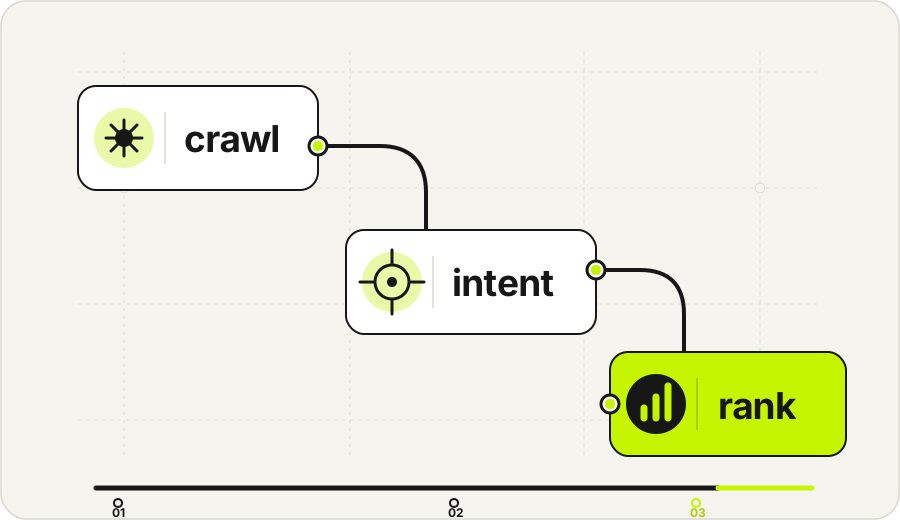
You can write the best content in your industry, but if search engines can't crawl, render, and understand your site, none of it ranks, and AI engines won't cite it either. Technical SEO is the foundation that makes everything else possible. This guide covers the essentials for UK businesses in 2026.
What is technical SEO?
Technical SEO is the practice of optimising a website's infrastructure so search engines and AI systems can crawl, render, index, and understand it. It's the layer beneath your content and links, covering how fast your pages load, how cleanly they're built, how they're structured, and how easily a machine can make sense of them.
The core pillars of technical SEO
- Crawlability & indexation. Ensure search engines can reach and index your important pages, and aren't wasting budget on the rest.
- Site speed & Core Web Vitals. Fast, stable, responsive pages rank better and keep users.
- Mobile-friendliness. With mobile-first indexing, your mobile experience is the experience that counts.
- Site architecture. A logical structure and internal linking help engines understand what matters.
- Structured data. Schema markup tells engines exactly what your content means.
- Security & canonicalisation. HTTPS, clean URLs, and correct canonicals prevent confusion and duplication.
Why technical SEO matters more than ever
Technical SEO has always been the price of entry for ranking. But it now matters for AI too: answer engines like ChatGPT and Perplexity read the same signals when deciding what to retrieve and cite. A slow, messy, hard-to-crawl site loses on both fronts. A clean one wins on both.
Content earns the ranking; technical SEO makes the ranking possible. Skip the foundation and everything above it wobbles.
A practical technical SEO checklist
- Submit an accurate XML sitemap and a clean robots.txt.
- Fix crawl errors, broken links, and redirect chains.
- Improve Core Web Vitals (loading, interactivity, visual stability).
- Ensure mobile parity and responsive design.
- Add structured data for your key page types.
- Tidy canonicals, pagination, and duplicate content.
- Allow the AI crawlers you want (GPTBot, PerplexityBot, Google-Extended) for AI SEO.
Technical SEO is step one
At Kay & Co., technical SEO is where every engagement begins, because it underpins both search rankings and AI citations. Get the foundation right, and your content and authority work compounds. Explore more in our resources library.
Frequently asked questions
Technical SEO is the practice of optimising a website's infrastructure so search engines and AI systems can crawl, render, index, and understand it. It covers crawlability, site speed, mobile-friendliness, structured data, and site architecture.
Even the best content fails if engines cannot access or understand it. Technical SEO is the foundation that makes everything else, rankings, AI citations, conversions, possible.
Yes. AI answer engines read the same technical signals as search engines. Clean, fast, well-structured, crawlable pages are easier for them to retrieve and cite, making technical SEO a prerequisite for GEO.